Cyber Security & Ethical Hacking (Beginner to Industry Ready)

Beginners
level

Estimated time

40hr

Students

10

Enrolled
Login to view price
Enter Details to Download Brochure

About the Course

The Online Cyber Security & Ethical Hacking Foundation Program is an 4-week, 40-hour training program designed for beginners. It covers cyber security fundamentals, networking, Linux, ethical hacking, penetration testing, web application security, AI-assisted cyber security, and defensive security. Through guided practical exercises, assignments, and a capstone project, learners build foundational skills for a career in cyber security.

What You'll Learn

  • Cyber Security Fundamentals and Security Principles
  • Networking Fundamentals and Protocols
  • Linux and Windows Security Basics
  • Virtualization and Kali Linux Lab Setup
  • Cryptography and Secure Communication
  • OSINT and Reconnaissance
  • Nmap and Network Scanning
  • Service Enumeration and Vulnerability Assessment
  • Ethical Hacking Methodology
  • Controlled Exploitation Fundamentals
  • Web Application Security and OWASP Risks
  • Burp Suite and Manual Web Testing
  • Wireless Security Fundamentals
  • AI-Assisted Cyber Security Tasks
  • AI Safety and AI Application Security
  • SOC Monitoring and Threat Intelligence
  • Incident Response and Security Reporting
  • Capstone Project and Interview Preparation

Skills You'll Gain

  • Cyber security concepts and risk identification
  • Linux command-line operations
  • OSINT and network reconnaissance
  • Network scanning and service enumeration
  • Basic vulnerability assessment
  • Web application security testing
  • AI-assisted research and analysis
  • Incident investigation and technical reporting

Tools & Technologies

  • Kali Linux
  • Nmap
  • Wireshark
  • Burp Suite
  • VirtualBox / VMware
  • Metasploit Framework
  • Linux Command-Line Tools
  • Windows Event Viewer
  • Web Security Testing Tools
  • AI Tools for Cyber Security Tasks

Practical Labs & Projects

Build practical understanding through guided exercises and supervised assessments in isolated lab environments.

  • Network configuration and packet analysis
  • OSINT, reconnaissance, and Nmap scanning
  • Vulnerability assessment and risk prioritization
  • Web application testing using Burp Suite
  • AI-assisted security analysis with output verification
  • Capstone assessment, report writing, and presentation

Benefits

  • Beginner-friendly foundation curriculum
  • 80 hours of structured learning over 8 weeks
  • Guided practical exercises and assignments
  • Introduction to AI-assisted cyber security
  • Exposure to both offensive and defensive security
  • Capstone project and technical reporting practice
  • Mock interviews and career preparation

Job Opportunities

The program builds foundational knowledge for entry-level cyber security career pathways.

  • Cyber Security Trainee
  • Junior Cyber Security Analyst
  • SOC Analyst (L1) Trainee
  • Vulnerability Assessment Trainee
  • Junior Security Operations Associate

Hiring Industries

  • Cyber security service providers
  • IT and software companies
  • Penetration testing and security consulting firms
  • Managed security service providers
  • Organizations with internal security teams
  • Technology startups and enterprises

Eligibility

  • Students and fresh graduates
  • IT and non-IT candidates
  • Beginners interested in cyber security
  • Working professionals exploring security careers

Prerequisites

  • Basic computer knowledge
  • Interest in cyber security and technology
  • A computer capable of running virtual lab software
  • 8 GB RAM recommended for practical lab activities
  • No previous cyber security experience required

Program Structure

  • Duration: 4 weeks
  • Total Hours: 40 hours
  • Sessions: 20 sessions
  • Schedule: 2 hours per day, 5 days per week
  • Format: Online training
  • Learning Format: Instructor-led learning, guided labs, assignments, practical assessments, capstone project, and mock interviews

Curriculum

21 sessions

  • 40hr
  • 1. Cyber Security Foundations
    2. Networking Fundamentals
    3. Linux Security Operations & Command-Line Mastery
    4. Secure Communation & Encryption Techniques
    5. Cyber Reconnaissance & Intelligence Gathering
    6. Wireless Network Attacks & Defence Mechanisms
    7. Virtualization, Lab Architecture & Security Environment Setup
    8. Mobile Application Security & Android Exploitations
    9. Offensive Security Lab Engineering
    10. Network Scanning, Enumeration & Exploitation ( NMAP & METASPLOIT )
    11. System Exploitation & Privilege Escalation Techniques
    12. Network Interception & Traffic Manipluation ( MITM Techniques )
    13. Google Hacking Database (GHDB) or Google Dorking
    14. Steganography & Data Hiding Techniques
    15. Web Application Security Testing Using Burp Suite
    16. Attack Surface Mapping & Asset Discovery
    17. Web Application Exploitation ( OWASP TOP 10 MASTERY )
    18. Penetration Testing & Bug Bounty Operations
    19. Vulnerability Management & Professional Security Reporting
    20. Career Preparations & Interview Readiness
    21. Capstone Projects & Practical Assignment
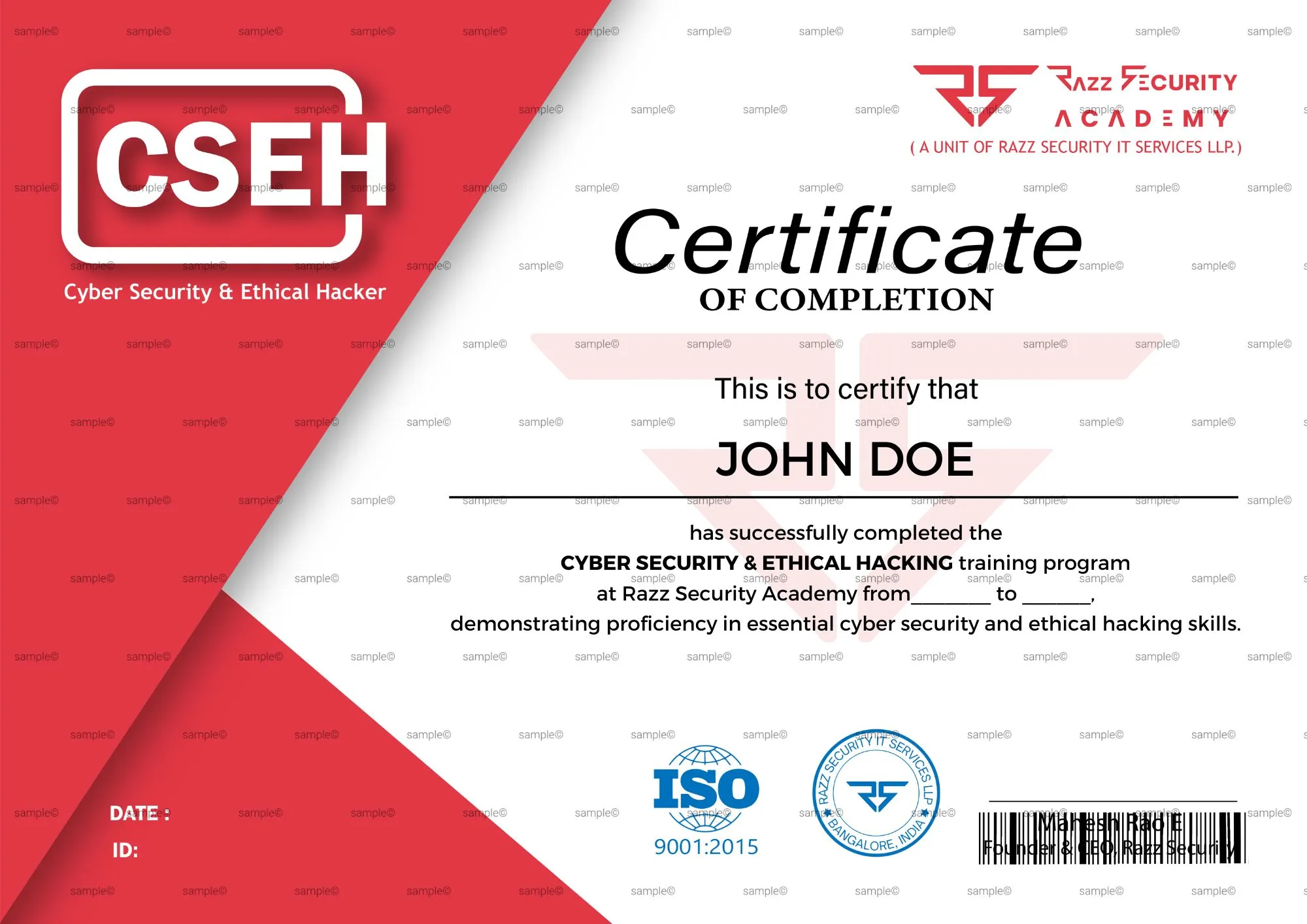
    certificate

    Cyber Security & Ethical Hacking (Beginner to Industry Ready)

    Login to view price

    Beginners level

    Estimated time

    40hr

    Students

    10

    Enrolled

    Enter Details to Download Brochure

    About the Course

    The Online Cyber Security & Ethical Hacking Foundation Program is an 4-week, 40-hour training program designed for beginners. It covers cyber security fundamentals, networking, Linux, ethical hacking, penetration testing, web application security, AI-assisted cyber security, and defensive security. Through guided practical exercises, assignments, and a capstone project, learners build foundational skills for a career in cyber security.

    What You'll Learn

    • Cyber Security Fundamentals and Security Principles
    • Networking Fundamentals and Protocols
    • Linux and Windows Security Basics
    • Virtualization and Kali Linux Lab Setup
    • Cryptography and Secure Communication
    • OSINT and Reconnaissance
    • Nmap and Network Scanning
    • Service Enumeration and Vulnerability Assessment
    • Ethical Hacking Methodology
    • Controlled Exploitation Fundamentals
    • Web Application Security and OWASP Risks
    • Burp Suite and Manual Web Testing
    • Wireless Security Fundamentals
    • AI-Assisted Cyber Security Tasks
    • AI Safety and AI Application Security
    • SOC Monitoring and Threat Intelligence
    • Incident Response and Security Reporting
    • Capstone Project and Interview Preparation

    Skills You'll Gain

    • Cyber security concepts and risk identification
    • Linux command-line operations
    • OSINT and network reconnaissance
    • Network scanning and service enumeration
    • Basic vulnerability assessment
    • Web application security testing
    • AI-assisted research and analysis
    • Incident investigation and technical reporting

    Tools & Technologies

    • Kali Linux
    • Nmap
    • Wireshark
    • Burp Suite
    • VirtualBox / VMware
    • Metasploit Framework
    • Linux Command-Line Tools
    • Windows Event Viewer
    • Web Security Testing Tools
    • AI Tools for Cyber Security Tasks

    Practical Labs & Projects

    Build practical understanding through guided exercises and supervised assessments in isolated lab environments.

    • Network configuration and packet analysis
    • OSINT, reconnaissance, and Nmap scanning
    • Vulnerability assessment and risk prioritization
    • Web application testing using Burp Suite
    • AI-assisted security analysis with output verification
    • Capstone assessment, report writing, and presentation

    Benefits

    • Beginner-friendly foundation curriculum
    • 80 hours of structured learning over 8 weeks
    • Guided practical exercises and assignments
    • Introduction to AI-assisted cyber security
    • Exposure to both offensive and defensive security
    • Capstone project and technical reporting practice
    • Mock interviews and career preparation

    Job Opportunities

    The program builds foundational knowledge for entry-level cyber security career pathways.

    • Cyber Security Trainee
    • Junior Cyber Security Analyst
    • SOC Analyst (L1) Trainee
    • Vulnerability Assessment Trainee
    • Junior Security Operations Associate

    Hiring Industries

    • Cyber security service providers
    • IT and software companies
    • Penetration testing and security consulting firms
    • Managed security service providers
    • Organizations with internal security teams
    • Technology startups and enterprises

    Eligibility

    • Students and fresh graduates
    • IT and non-IT candidates
    • Beginners interested in cyber security
    • Working professionals exploring security careers

    Prerequisites

    • Basic computer knowledge
    • Interest in cyber security and technology
    • A computer capable of running virtual lab software
    • 8 GB RAM recommended for practical lab activities
    • No previous cyber security experience required

    Program Structure

    • Duration: 4 weeks
    • Total Hours: 40 hours
    • Sessions: 20 sessions
    • Schedule: 2 hours per day, 5 days per week
    • Format: Online training
    • Learning Format: Instructor-led learning, guided labs, assignments, practical assessments, capstone project, and mock interviews

    Curriculum

    21 sessions

  • 40hr
  • 1. Cyber Security Foundations
    2. Networking Fundamentals
    3. Linux Security Operations & Command-Line Mastery
    4. Secure Communation & Encryption Techniques
    5. Cyber Reconnaissance & Intelligence Gathering
    6. Wireless Network Attacks & Defence Mechanisms
    7. Virtualization, Lab Architecture & Security Environment Setup
    8. Mobile Application Security & Android Exploitations
    9. Offensive Security Lab Engineering
    10. Network Scanning, Enumeration & Exploitation ( NMAP & METASPLOIT )
    11. System Exploitation & Privilege Escalation Techniques
    12. Network Interception & Traffic Manipluation ( MITM Techniques )
    13. Google Hacking Database (GHDB) or Google Dorking
    14. Steganography & Data Hiding Techniques
    15. Web Application Security Testing Using Burp Suite
    16. Attack Surface Mapping & Asset Discovery
    17. Web Application Exploitation ( OWASP TOP 10 MASTERY )
    18. Penetration Testing & Bug Bounty Operations
    19. Vulnerability Management & Professional Security Reporting
    20. Career Preparations & Interview Readiness
    21. Capstone Projects & Practical Assignment
    certificate

    Contact Us

    At Razz Security Academy, we're here to guide you on your journey toward becoming a skilled cybersecurity and tech professional. Whether you have questions about our courses, need assistance with enrollment, or want to collaborate, we’re just a message away. Stay connected and let’s build a secure digital future together.

    Razz Logo
    ADDRESS

    Razz Security Academy, 1st floor, 16, 16th Main, 6th Cross Rd, near Post Office,BTM 2nd Stage, Bengaluru, Karnataka 560076

    EMAIL ID

    contact@razzsecurity.com

    PHONE NUMBER

    +91 86187 10868